
Celebrities
Commentary: Rivers Crisis and the Burden of Political Loyalty in Nigeria’s Democracy

By Oludotun Adetunberu
The lingering political crisis in Rivers State has once again exposed the fragile nature of political succession and loyalty within Nigeria’s democratic system.
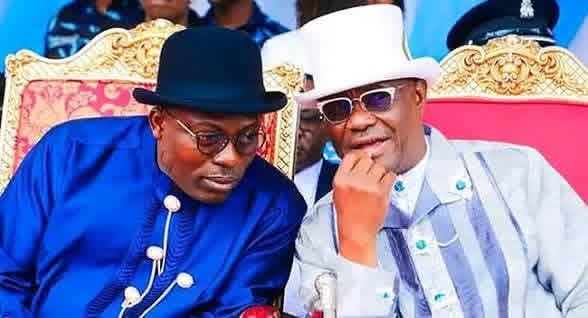
What began as a disagreement between Governor Siminalayi Fubara and his political godfather, Nyesom Wike, has gradually evolved into a major lesson on power, political survival, and the dangers of elite conflict in governance.
In Nigeria’s political environment, power is rarely built in isolation. Political leaders often emerge through carefully constructed networks of influence, patronage, alliances, and institutional support. This reality explains why political succession in many states is usually tied to the influence of dominant political actors who invest heavily in building structures and grooming successors.
Governor Fubara’s emergence in Rivers politics clearly followed this pattern. Before becoming governor, he was largely viewed as a technocrat with administrative experience rather than a grassroots political mobilizer.
His rise was significantly strengthened by the political structure and influence of Nyesom Wike, whose dominance in Rivers politics was built through years of grassroots engagement, political networking, and institutional consolidation.
Expectedly, some experienced political leaders reportedly advised Governor Fubara against confronting his political godfather too early. Such advice reflected the practical realities of Nigeria’s patronage-driven politics where rebellion against established political structures often comes with serious political consequences.
One of the greatest challenges facing successor administrations in Nigeria is how to balance political independence with continuity. While every elected governor naturally desires autonomy and control, political maturity also demands patience, coalition management, and respect for existing political relationships.
Leaders who ignore these realities frequently encounter resistance capable of destabilizing governance and weakening institutions.
Sadly, the Rivers crisis has shifted public attention away from governance and development to endless political confrontation.
Conversations that should ordinarily focus on economic growth, healthcare, infrastructure, education, and industrial development have now been overshadowed by impeachment threats, defections, and struggles for political control.
The situation also reflects a broader weakness within Nigeria’s democracy where politics remains heavily personalized rather than ideologically driven.
Political competition is often centered on control of structures, influence, and loyalty networks rather than policy alternatives or developmental visions. This explains why political disagreements easily degenerate into institutional crises.
However, political loyalty does not necessarily prevent effective governance or independent leadership. Some governors in Nigeria have demonstrated that maintaining cordial relationships with political godfather can coexist with productive governance.
Governor Biodun Oyebanji of Ekiti State is often cited as an example of political maturity through his stable relationship with his predecessor, Kayode Fayemi, while sustaining governance continuity and institutional stability.
Ultimately, the Rivers political crisis serves as a cautionary lesson within Nigeria’s democratic experience. It reminds political leaders that occupying public office is different from sustaining political legitimacy and stability.
Leadership requires not only constitutional authority but also strategic relationships, institutional discipline, grassroots acceptance, and the wisdom to manage ambition carefully.
The unfolding events in Rivers State may therefore remain one of the most significant political lessons in Nigeria’s Fourth Republic, reinforcing the reality that in highly personalized political systems, power without structure is fragile, while ambition without patience can produce consequences far beyond expectations.
Asiwaju Oludotun Adetunberu, PhD
Lecturer, Department of Peace and Security Studies, Ekiti State University.
Former Global President, EKSU Alumni Association writes this piece.