
Reports
INEC: No Unverified Results Will Be Uploaded to IReV, Media Urged to Fact-Check First

By Joseph Sunday
INEC National Chairman, Professor Joash Ojo Amupitan, has assured Nigerians that no election results will be uploaded to the INEC Result Viewing Portal (IReV) without full verification. He urged the media to fact-check information before publication to protect the credibility of the electoral process.
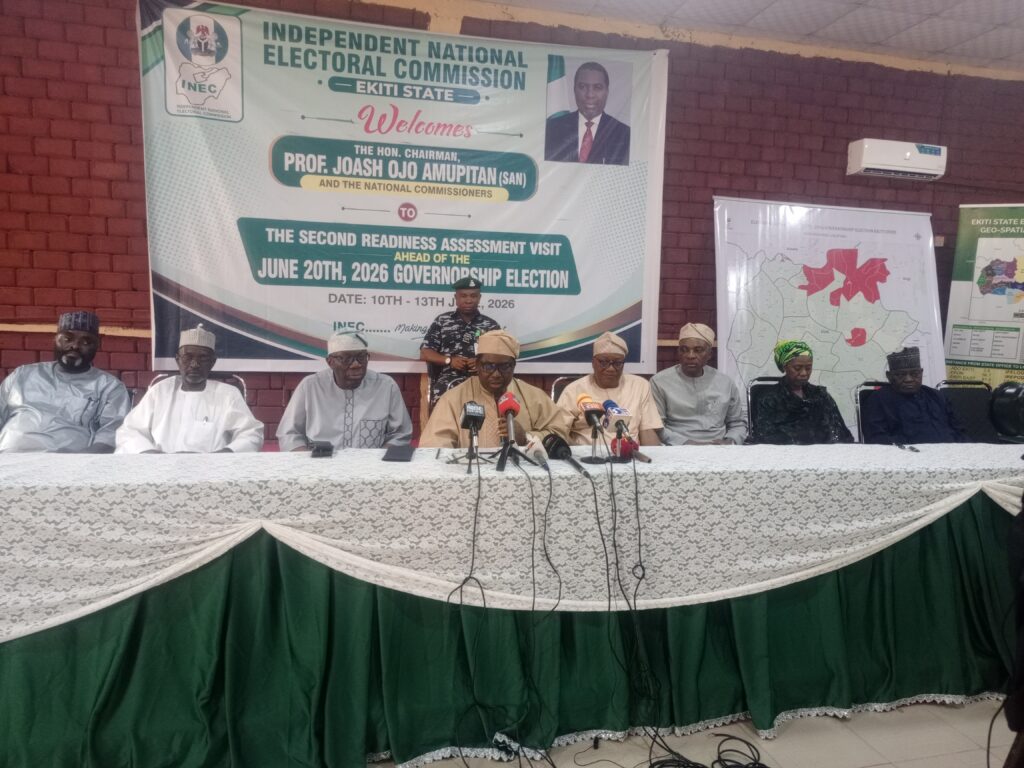
“We cannot approach this with bias, or we risk the collapse of the institution meant to lead this country,” Amupitan said. “Fake news and manufactured election-day panic are not valid reasons to question results.”
To promote transparency, INEC said it has streamlined accreditation for journalists and observers to monitor proceedings in real time. In return, the Commission expects a firm commitment from the media: verify before you publish. “Do not report what has not happened. When in doubt, we will share the facts before broadcast,” he added.
Addressing concerns over delays in result transmission, Amupitan explained that uploads depend on both completion of collation and network availability. He cited the FCT election, where results from nine polling units were ready between 2–3 p.m., but uploads were withheld until all units were complete. “We will not upload results we cannot verify,” he stated. “In areas without network coverage, transmission is impossible until officers reach covered zones. That delay must not be used to discredit the process.”
Amupitan described the 2026 election as a “critical diagnostic milestone” for Nigeria’s institutions ahead of the 2027 general elections. He confirmed that 14 political parties have been cleared to contest. Due to time constraints and inconsistent judicial rulings, the ballot will remain unchanged for all registered candidates. INEC, he said, will only announce candidates who have been “accepted, verified, and cleared.”
Voter registration and candidate interaction have been extended to Sunday to boost participation. “If you choose not to vote, that is your right. But those who want to vote should not be disenfranchised,” he said.
On electoral malpractice, INEC disclosed that 1,000 candidates are currently under vote-binding and vote-tracing protocols. Amupitan clarified, however, that INEC lacks powers of arrest or investigation — those reside with the DSS, EFCC, and the Police. He stressed the need for strong security, noting: “No matter how credible your election is, security must be in place.”
Through the Inter-Agency Consultative Committee on Election Security, INEC has mapped 469–500 polling units identified as vulnerable or located within 500 meters of flashpoints. Additional personnel will be deployed to those areas.
The Commission’s priorities, he said, are to protect voters from harassment, safeguard field officers, and ensure media safety through dedicated escalation channels for polling unit incidents.
Amupitan emphasized that new measures will prevent incorrect results from being uploaded to IReV. He warned that misinformation remains the greatest threat, recalling past incidents where old videos were recirculated as current events, triggering international concern.
He cited a case where human error — not electronic failure — caused a tally discrepancy in one polling unit. INEC’s validation system caught and corrected it. “It was one unit out of thousands. The error was fixed, the process held. That is proof the system works,” he said.
“Your role as the frontline is critical,” Amupitan told journalists. “The election must be peaceful, credible, timely, and results management must be sound.”