Education
Nigerian Educators Urge Integration of Technology In Humanities Discipline

By Oluronke Kuku
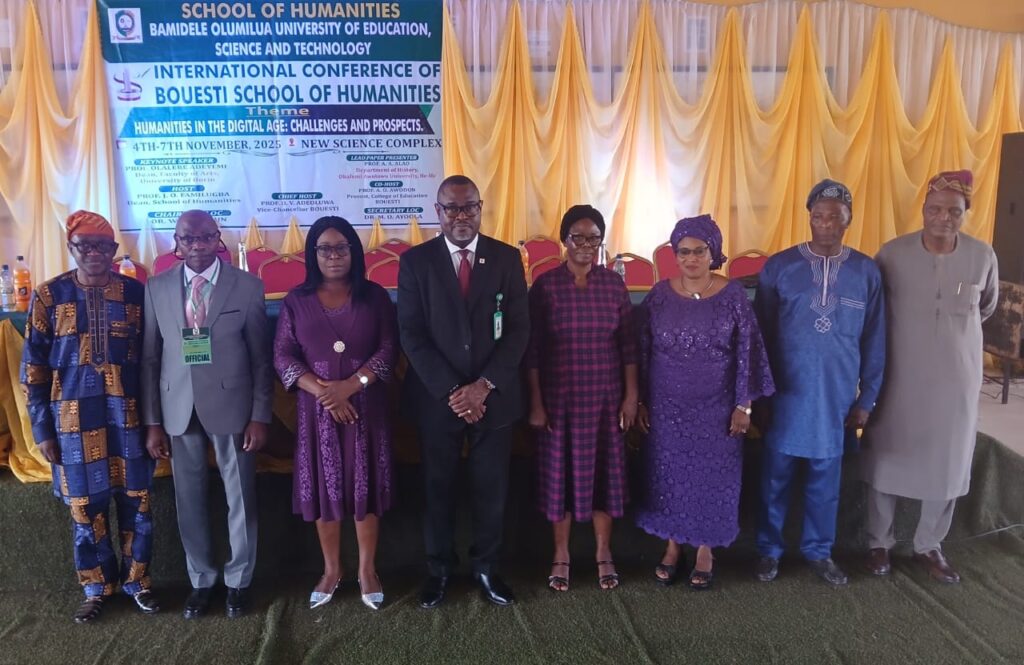
Prominent Nigeria educationists who gathered at the first international conference of the Bamidele Olumilua University of Education, Science and Technology (BOUESTI) in Ikere Ekiti, Ekiti State, has called for the integration of digital tools into humanities to enhance learning and research in tertiary institutions.
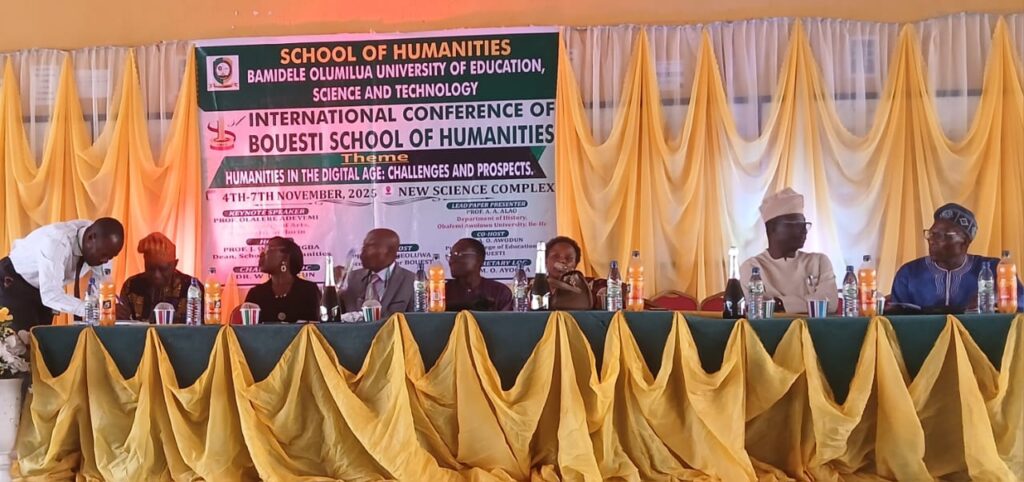
The conference, themed “Humanities in the Digital Age: Challenges and Prospects,” featured keynote speaker Professor Olalere Adeyemi, the Dean of the Faculty of Arts, University of Ilorin, who emphasized the need for African digital humanities to develop its own approaches, rather than relying on imported methods.
“We cannot continue to wear ill-fitting imported garments,” Professor Adeyemi said. “An imitated trouser is either too tight or too loose. Our own garment is never short by an inch.”
The conference highlighted the importance of digital humanities in promoting collaboration, critical thinking, and problem-solving skills, as well as addressing the challenges of low awareness, poor infrastructure, and limited access to technology.
Professor Akin Alao, lead paper presenter and historian at Obafemi Awolowo University, Ile-Ife, described the digital age as an era of endless possibilities and advocated for the integration of digital literacy into humanities education.
The conference recommended policy advocacy, government funding, and the establishment of digital centers in Nigerian universities to promote collaboration between computer scientists and humanists.

Professor Adeyemi emphasized the significance of humanities in providing ethical, cultural, and emotional considerations that pure science lacks, stating, “Science is incomplete without humanity.”
The conference also emphasized the need for African scholars to promote their own languages and epistemologies, telling their stories, preserving their cultures, and contributing to global knowledge on their own terms.
As Professor Adeyemi noted, “A humanities graduate with digital competence becomes far more relevant and employable in today’s world.”