
Education
INEC, Media Mobilize to Protect Ekiti June 20 Governorship Election From Fake News

By Joseph Sunday
With just 25 days to the Ekiti State off-cycle governorship election, the Independent National Electoral Commission has moved to secure the partnership of media houses against what it calls the biggest threat to credible polls: misinformation and disinformation.
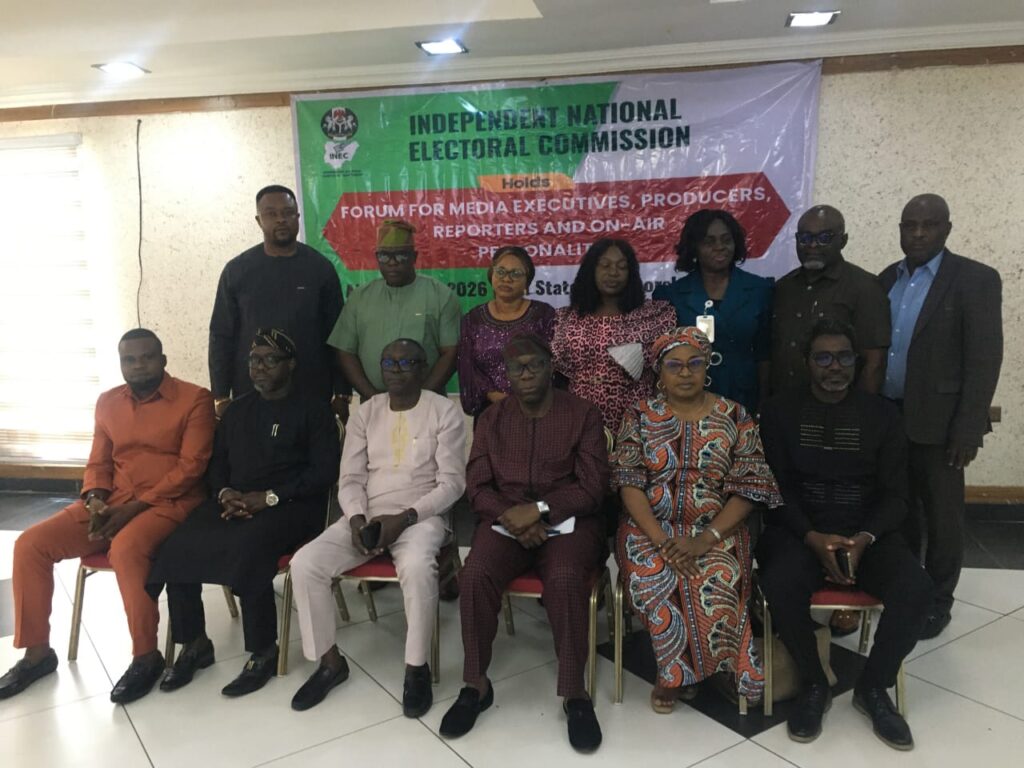
At the Forum of Media Executives, Producers, Reporters and On-Air Personalities held Tuesday in Ado-Ekiti, INEC urged journalists to become “strategic partners in safeguarding democracy” by stopping fake news before it undermines the June 20 election.
Resident Electoral Commissioner for Ekiti State, Dr. Bunmi Omoseyindemi, declared the forum open with a direct charge to the press. He said the success of any election depends greatly on the quality, accuracy, and professionalism of information given to voters.
According to Dr. Omoseyindemi, INEC’s preparations are in full swing. Sensitive materials are being deployed, personnel training is ongoing, and voter education has been expanded. The Commission is also in sustained talks with security agencies, political parties, and transport unions.
Yet he warned that misinformation remains the “major challenge confronting the entire electoral process.” False reports, manipulated videos, misleading headlines, and unverified election information can create panic and threaten peaceful polls.
He asked media houses to verify all election-related information with INEC before publication. He also called for an end to sensationalism, stronger amplification of official voter education messages, and balanced coverage for all parties as required by the Electoral Act.
Delivering the goodwill message of INEC Chairman, Professor Joash Amupitan (SAN); his Chief Press Secretary, Adedayo Oketola did not mince words. “In the crucible of an election, a loose word is as dangerous as a stray bullet,” he told participants.
Oketola revealed that 54 media organisations and 470 personnel had already submitted accreditation requests for the June 20 poll as of last week.
He broke down the threats into four categories: misinformation, disinformation, mal-information, and information manipulation and interference.
He had a specific message for on-air personalities and producers. “Your microphones hold an immense emotional currency. A single unverified report read live on air can instantly trigger public panic,” Oketola said. To reporters and editors, his advice was blunt: “Speed must never sacrifice accuracy.”
On INEC’s readiness, Oketola confirmed that 7 of 9 scheduled activities on the election timetable had been completed. Logistics hubs are secure, and the Commission is targeting the simultaneous opening of 2,445 polling units across 16 LGAs by 8:30 a.m. on Election Day.
“Our communication lines are wide open. Do not run with rumours. Verify before you broadcast,” he said, promising “prompt, factual, and unvarnished updates” from the Commission.
In his own Opening Remarks, National Commissioner and Chairman of the Information and Voter Education Committee, Malam Mohammed Kudu Haruna, also represented by the Ekiti State INEC REC, Dr Bunmi Omoseyindemi, described the forum as “a deliberate investment by INEC in the most powerful institution standing between the Nigerian voter and electoral ignorance, the media.”
Haruna framed the Ekiti poll as a critical off-cycle election involving 16 local government areas, 117 registration areas, 2,445 polling units, and 13 political parties. He said many see it as a signal for the 2027 general elections.
He flagged voter apathy, vote buying, violence, and misinformation as “structural threats” to electoral integrity. Voter turnout in Ekiti’s 2022 governorship election was about 48%. “For too long, we have accepted a democracy where the 70 per cent who stay at home allow the remaining 30 per cent to decide the future for everyone,” he said.
INEC confirmed the final list of 13 candidates has been published. The final voter register was presented to parties last week in Ado-Ekiti. The Bimodal Voter Accreditation System will be used for voter authentication, while polling unit results will be transmitted electronically to the INEC Result Viewing Portal.
Haruna outlined five key areas for media support: voter education, combating misinformation, reporting electoral offences, responsible security reporting, and inclusive coverage. He urged editors to balance coverage of controversy with reporting on institutional progress.
“An election where INEC delivers materials on time, BVAS works, and results are transmitted correctly is not a non-story. It is the story of democracy functioning as it should,” he said. He also reminded journalists that under the Electoral Act 2026, vote buying attracts up to ₦5 million fine, two years imprisonment, or both, plus 10-year disqualification from public office.
Speaking on technology, Mrs. Oderinde Titilayo, Head of ICT/VR for INEC Ekiti State, said the Commission’s main innovations remain BVAS and IReV. BVAS will be used for voter accreditation on election day. IReV is used to upload polling unit result sheets.
She explained that the current version of IReV has been upgraded. It now prevents the upload of incorrect or non-INEC result sheets and blocks wrong data entries. “This upgrade is designed to improve the transparency and credibility of the result management process,” Oderinde said. She clarified that no entirely new technology is being introduced — only improvements to existing systems.
Media accreditation is ongoing and will close at midnight on June 7, 2026. So far, 60 media organisations have applied to accredit 560 journalists. INEC also noted provisions for inclusion, including magnifying glasses, braille ballot guides, and priority voting for persons with disabilities. The Commission reiterated: No PVC, No Voting.
Responding on behalf of journalists, the Ekiti State NUJ Chairman, Comrade Kayode Babatuyi, commended INEC for recognizing that credible elections are built on informed citizens. “And informed citizens are made possible by responsible, professional, and ethical media,” he said.
He admitted that fake news remains a concern but said the NUJ has taken steps to mitigate it. Before now, online journalists were not part of the union, making their activities difficult to regulate. To address this, the NUJ brought online journalists into its structure.
“Today, we have the chairman of an online chapel in the State in our midst, Mr. Ayodele Abere” he said. “The purpose of this is to ensure that every journalist operating online in Ekiti can be reached. We know that once they go outside the ethics of the profession, they can be moderated.”
He argued that because of these steps, the issue of fake news is now “very, very minimal” in Ekiti. The little misinformation that exists, he said, comes mostly from political social media operators, not professional journalists.
The NUJ Chairman pledged the council’s commitment to partner with INEC to ensure the media plays its role as watchdog and educator. He promised continued training of members, adherence to the code of ethics, and constructive engagement with stakeholders.
He also urged colleagues who had not yet registered with INEC for election coverage to do so immediately. “I won’t entertain any complaint or any plea on that very day,” he warned.
Dr. Omoseyindemi and Oketola both appealed to political actors to shun inflammatory rhetoric. “Elections should not be seen as a battlefield but as a democratic process for the peaceful expression of the will of the people,” Dr. Omoseyindemi said.
Oketola closed with a tribute to Ekiti’s reputation: “The people of Ekiti State are globally renowned for their intellect, honour, and deep appreciation for truth. Let your coverage reflect this heritage.”