
Human Rights
Reporting Polling Unit Results is Lawful, Declaring Winners is INEC’s Exclusive Power — Samson Itodo

By Joseph Sunday
To strengthen public understanding of election reporting in Nigeria, Executive Director of Yiaga Africa, Samson Itodo, has clarified the legal boundaries between reporting polling unit results and declaring winners of elections.
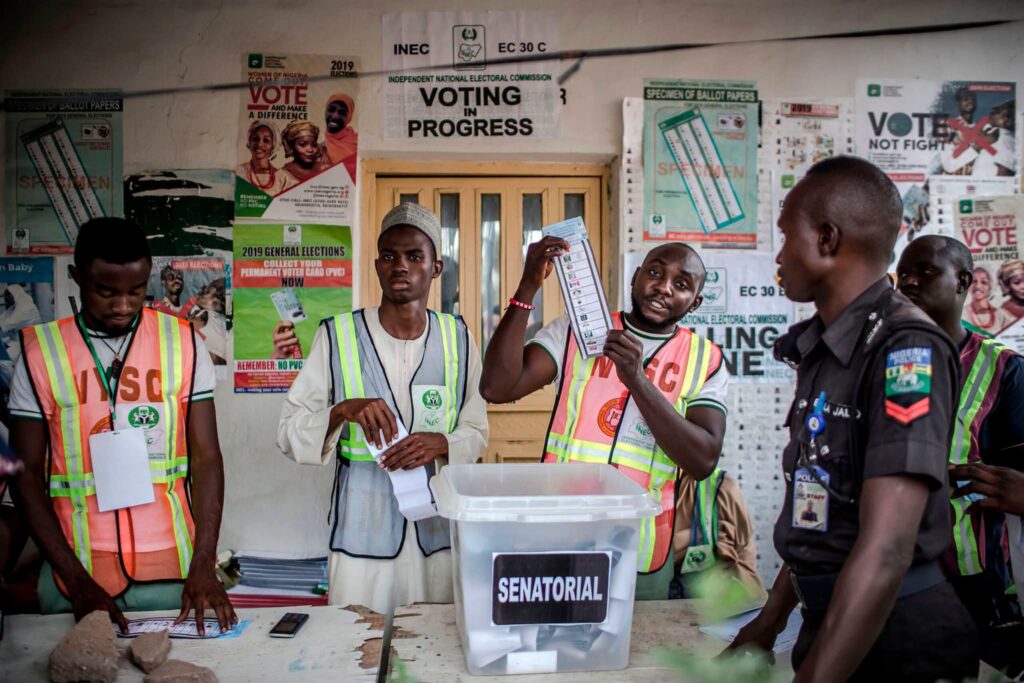
Itodo explained that election results management begins at the polling unit, where results are announced immediately after voting and counting. According to him, the Presiding Officer verbally announces the results and pastes them publicly on the EC8A result sheet, a measure designed as a core transparency safeguard.
“Once declared at the polling unit, the results become public information,” he noted.
He said the introduction of the INEC Result Viewing Portal (IReV) was meant to deepen that transparency, by making polling unit results accessible to citizens, the media and other stakeholders in near real-time.
The portal, he said, allows the public to follow the collation process and reduces opportunities for manipulation. On this basis, Itodo maintained that the media is within its rights to report results already officially announced by INEC officials at polling units.
According to him, this role is critical, especially given persistent public distrust in results management, with collation historically considered the weakest and most vulnerable link to interference by political actors.


He identified two ways independent media and citizen oversight help address the challenge.
First, Itodo said it shields INEC from pressure. “When polling unit results are already in the public domain, documented and independently aggregated, it becomes significantly harder to alter them under political pressure. Public knowledge strengthens INEC’s hand to uphold the integrity of the process,” he stated.
Second, he said it strengthens electoral credibility. Independent monitoring, reporting and aggregation of officially declared polling unit results, he argued, add a vital layer of accountability, build public confidence and serve as a deterrent against manipulation.
However, Itodo stressed that there is a clear legal distinction between announcing results and declaring a winner.
Under the Constitution and the Electoral Act, he said, only the Independent National Electoral Commission (INEC) has the power to declare final results and return a candidate as duly elected.
“A declaration is a formal legal pronouncement that an election has been won. Until INEC makes that declaration, no candidate can be legally regarded as winner,” he said.
He explained that reporting and aggregating polling unit results already declared by INEC is not the same as declaring a winner. Media organisations, he noted, can report, tally and analyse those public results, provided it is done responsibly, accurately and in line with professional ethics.
Itodo further cautioned that the media must understand the dynamics of collation, noting that final outcomes can change during collation due to cancellations for over-voting, or due to elections that did not hold, were postponed, or were disrupted by violence, which are legally considered before a final declaration.
That is why, he said, all stakeholders must refrain from declaring winners before INEC completes collation.
“Reporting officially announced results at polling unit, ward, LGA or state level promotes transparency; declaring a winner usurps INEC’s exclusive constitutional mandate,” he added.
In summary, Itodo said media organisations can and should responsibly report and aggregate officially announced results as part of their public duty, but such reporting must not be presented as a final declaration.
“Until INEC officially declares and returns a winner, all figures remain part of an ongoing process,” he said.
He called on all actors — media, civil society and observers — to adhere to integrity, accuracy, professionalism and ethical standards, warning that while false or misleading reporting can undermine trust and attract sanctions, responsible reporting of results already announced by INEC enhances transparency, strengthens oversight and advances democratic accountability.