
Politics
Ekiti 2026 Governorship Race ‘Uncompetitive’ as INEC Preparedness Stalls at 34%

… EU-Backed Report Warns
By Joseph Sunday
ADO-EKITI — With 36 days to the June 20, 2026 off-cycle governorship election, Nigeria’s Independent National Electoral Commission is only 34% ready, raising concerns about the poll’s credibility, a pre-election assessment by civil society groups under the European Union Support to Democratic Governance in Nigeria Phase II has been found.
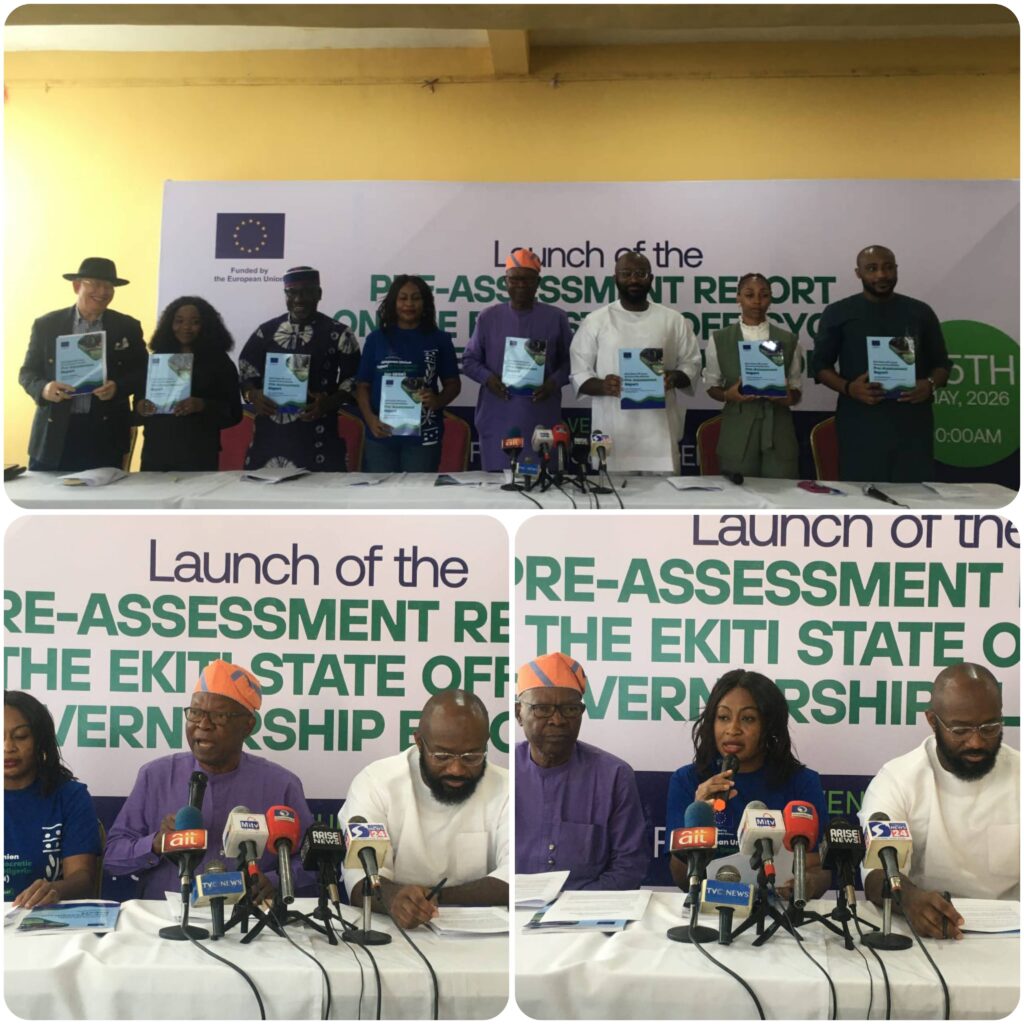
Presented by the Election Observation Hub, the report described the race as “effectively uncontested” despite a calm pre-election atmosphere.
Incumbency advantage, elite consensus around the sitting governor, opposition infighting, and a wide resource gap have left many voters viewing the outcome as a foregone conclusion.
First test of Electoral Act 2026:
The poll will be the first to be conducted under the new Electoral Act 2026. It is expected to test key provisions including electronic transmission of results, administrative review of results, and new collation procedures.
Held seven months before the 2027 general elections, Ekiti is seen as a stress test for INEC’s operational capacity, security agencies’ neutrality, and public confidence. “Failures here could set a harmful precedent for Osun and 2027,” the Hub warned.

INEC: 34% ready, funds yet to be released:
As of April 14, 2026, INEC’s 16 LGA offices in Ekiti were 34% prepared. While Continuous Voter Registration has been completed and the voter register was displayed across 2,445 polling units on May 20, the State Office has yet to receive election funds. Several offices, vehicles, and collation centres still require urgent rehabilitation.
PVC collection for 32,475 new registrants is scheduled for June 4–11, 2026. “Ongoing INEC activities cannot offset the absence of core funding and infrastructure,” the report stated.
Security plans not operational:
The Nigeria Police Force has drafted Operation Order 08/2028, proposing 9,780 conventional officers, 25 PMF units, 200 patrol vehicles, 12 APCs, and 3 helicopters. But the plan is not operational. The Hub flagged risks of politicization, bias, and excessive force.
Risk mapping listed Ado-Ekiti as high-risk for urban violence, while Ikole, Moba, and Ilejemeje are high-risk for kidnapping. Other major threats include vote buying, political thuggery, disinformation on WhatsApp and local radio, and possible militarisation of security.
Media pressure, inclusion gaps:
Ekiti’s media space includes state-owned and private outlets, plus a growing but unregulated digital sector. Journalists face physical intimidation, legal harassment under the Cybercrimes Act and defamation laws, and self-censorship due to economic pressure. A N5 million campaign signage levy by the state’s advertisement agency has disproportionately affected opposition parties.
On inclusion, none of the 13 parties fielded a female governorship candidate, and no candidate identifies as a person with disability. This persists despite the Ekiti State Political Offices (Gender Composition) Law 2022 and the Discrimination Against Persons with Disabilities (Prohibition) Law 2020. High nomination fees and patronage networks continue to exclude women, youth, and PWDs.
Recommendations:
The Hub described INEC as “the most critical actor,” saying its failure would affect all other areas. At a press briefing, it urged INEC to immediately release election funds to repair offices, RACs, and collation centres; stress-test BVAS and IReV for accreditation and e-transmission; activate its Security and Alert Notification System; provide rain gear and voter education; and deploy more assistive devices for PWDs.
Security agencies were advised to remain neutral, adopt a rights-based approach to vote trading, and guarantee safety for voters, journalists, observers, and INEC staff. Political parties and the media were urged to sign the Peace Accord, reject vote buying, and ensure fair, fact-checked coverage.
“Warning signs” ahead of June 20:
The Hub said credibility will be judged not only by the absence of violence, but by “transparency, inclusiveness, and public acceptance of the outcome.” With 34% preparedness, delayed funding, an uncompetitive race, and zero female candidates, it called these “warning signs” ahead of June 20.
The full Pre-Election Assessment Report is available at www.eusdgn.org.
The Election Observation Hub includes CEMESO, ElectHER, International Press Centre, Nigerian Women Trust Fund, TAF Africa, The Kukah Centre, and Yiaga Africa.