
Education
IIJ Ekiti Matriculates New Students, As Leaders Call for Professionalism Over ‘Phone Journalism’

By Kemi Folarin, Jaye Omogbehin
The International Institute of Journalism, IIJ, Ado Ekiti Study Centre has held its 2026 matriculation ceremony on Thursday, with media leaders urging new students to embrace ethics, development journalism, and professionalism in the era dominated by untrained “phone journalists.”
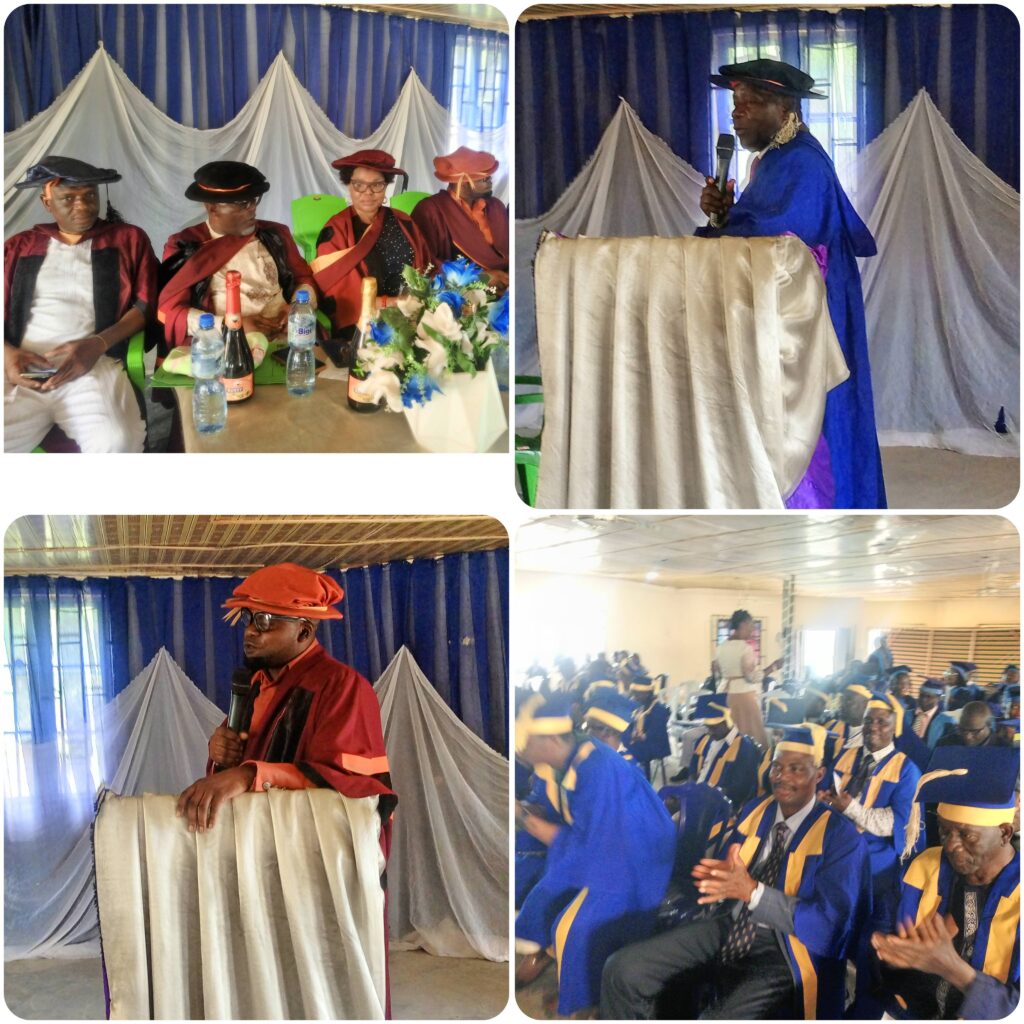
In his opening remarks, the State Chairman of the Nigeria Union of Journalists, NUJ, Ekiti State Council, Comrade Kayode Babatuyi reminded the matriculants of his humble beginnings at the IIJ Centre, recalling how former NUJ Chairman, Rotimi Ojomoyela personally funded the first classrooms.
He hailed Pastor Dare Daniels, the Coordinator of the IIJ Study Centre in Ado Ekiti for building “an IIJ the Ekiti NUJ is proud of today.”
Babatuyi speaking on expectations from the students bluntly said “the IIJ programme is not a sakamanje programme or ‘Iruwa ogiri wa’.”
He charged the students to take their studies seriously and pay tuition fees promptly and as when due.
Babatuyi used the opportunity to announce that the IIJ Ado Ekiti Study Centre plans to hold it’s long awaited Convocation next year 2027, covering the past 10 sets of graduates.

Delivering his goodwill message at the event, Prince Sola Adetule, speaking for the Academic Board of the IIJ reminded the new students that the IIJ is not an “Awolowo school” where free education runs — but stressed that fees must still be paid. He urged students to build network of friends during their study and see the institution as their own.
Former Ekiti NUJ Chairman, Comrade Rotimi Ojomoyela, who noted that the NUJ established the International Institute of Journalism in 1995, counselled the new journalists to “report what they see, not emotions” and avoid using their pens for blackmail. He advised aides to politicians among them to “create space for their bosses to be queried and questioned.”
NUJ South West Zone B Vice President, Comrade Ronke Afebioye-Samo, called the IIJ “the backbone of the NUJ in Nigeria today.”
She urged the students to uphold three pillars of integrity, courage, and impact, pointing out that “the pen in their hands is powerful, and emphasizing its usage to build and not to destroy”.
Ekiti State Commissioner for Information, Rt. Hon. Taiwo Olatunbosun, an IIJ alumnus himself, who was represented by the Director of Information Services, Mr Tope Babalola, charged the matriculants to remain disciplined and uphold truth and ethics of the journalism profession. “From among you, will emerge nationally renowned journalists, broadcasters, and public affairs analysts,” he said.
The Keynote Speaker for the Matriculation Lecture, Ambassador Wale Ojo-Lanre, who spoke on “Development Journalism: The Responsible Pathway for Rookie Journalists in the Age of Phone Journalism”, draw his message form the 1997 experience at IIJ Ibadan, where he said he told students that “writing and journalism are related, but they are not the same.”
Ojo-Lanre warned that “any fool can post, but not every poster is a journalist.”
He argued that a phone is not a newsroom and does not teach ethics, balance, or verification.
He charged the new students to embrace development journalism by reporting how roads, hospitals, and policies affects the people.
He averred that “Development Journalism is not propaganda but journalism with depth, context, conscience and public purpose”.
He concluded with a challenge: “Do not come into journalism merely to be popular. Come into journalism to be useful. Do not come into journalism merely to trend. Come into journalism to build trust.”