
Uncategorized
FROM THE EDITOR’S DESK: Governor Oyebanji, What Is Your Blueprint for Ekiti Commerce?

For three days last week, I walked through the commercial arteries of our state — from Oja Oba in Ado-Ekiti to Ikole Main Market, from the timber sheds in Aramoko to the roadside garages in Ifaki. The story is the same: resilience in the face of stagnation.
Our people are hardworking. The welder in Irona still sparks till 8 p.m. The woman frying akara in Oja Bisi still borrows at 30% interest to restock. The young graduate selling thrift clothes on Instagram still watches his profit vanish on the Lagos road.
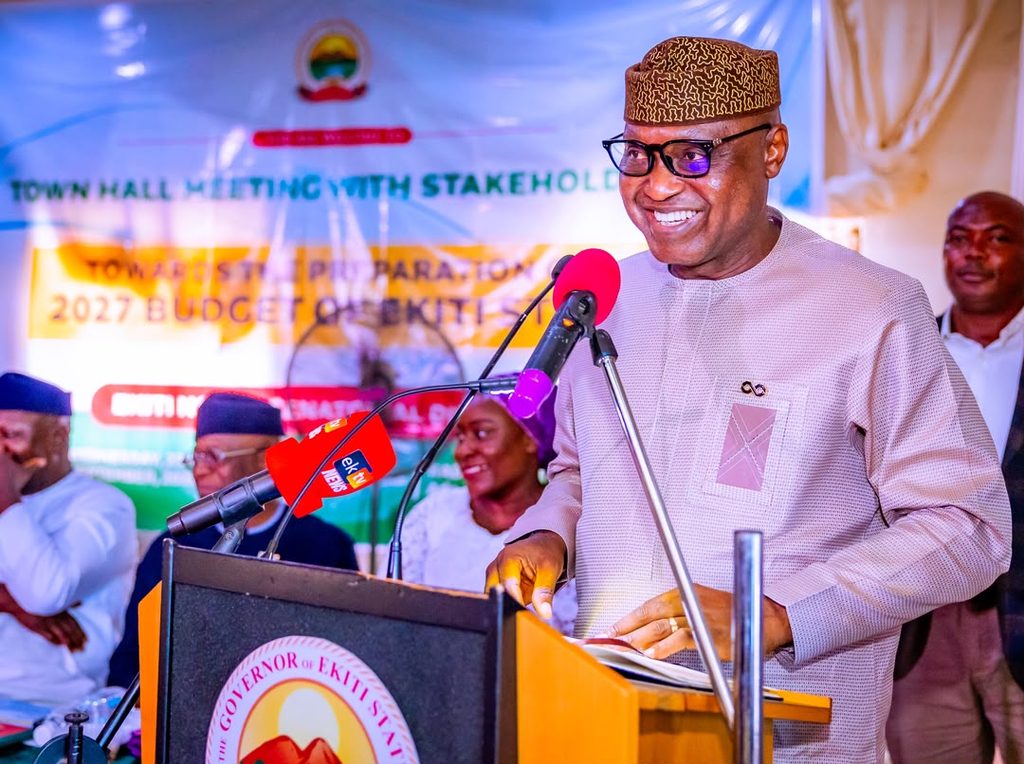
When Governor Biodun Oyebanji stood in Ifaki-Ekiti on Wednesday, September 23, 2026, during the Ekiti North Senatorial District town hall meeting on the 2027 Budget, and declared that his second-term projects would focus on boosting commerce, enhancing productivity and stimulating sustainable business growth, every trader in Ekiti had reason to lean forward.
Because that, Your Excellency, is the pertinent question: Tell us HOW.
Beyond Rhetoric: Where Is The Commerce Blueprint?
We have heard this promise before. At a SMEDAN intervention programme for MSMEs, you pledged to create economic opportunities and harness the potential in the informal sector through Public-Private Partnership. Noble words.
But Ekiti commerce does not need another intervention where rice and sewing machines are shared. It needs a structural plan.

At the Ifaki town hall, you provided a clue: “In our second term, whatever we are going to do must add value, because resources are limited. There must be value addition. We must catalyse productivity and ensure our people are productive. It is only when there is value that artisans like welders and auto mechanics can thrive and become prosperous.”
Value addition. That is the keyword. Governor, we ask: Where is Ekiti’s Value Addition Masterplan?
Ekiti produces cocoa, cassava, timber and granite. Yet we export them raw and import them back as chocolate, garri, furniture and tiles. When will the cocoa from Oke Ako-Ikole become Ekiti chocolate made in Ikere? When will your cassava revolution — for which you have promised an enabling environment for investors — finally move from farm to factory?
The Four Pillars You Must Address
- Market Infrastructure
Our markets are stuck in the 1970s. No cold storage for tomatoes in Ado, no modern abattoir, no fire safety, no access roads when it rains. Traders pay levies but get no receipts. What will your second term do to rebuild Oja Oba, Oja Bisi, Ikole and Efon markets into 21st-century commercial hubs with electricity, water and digital payment systems? You said investments in electricity, roads and water will remain priorities — traders want to know how that translates to their stalls. - MSME Financing
You have spent over N50 billion on agribusiness in three years, with a vision to make Ekiti the food basket of the nation. Commendable. But what of the tailor, the vulcanizer, the POS operator, the salon owner — the 80% who constitute Ekiti commerce? The same informal sector you promised to harness. Will there be an Ekiti State Traders Bank? A low-interest loan scheme without political godfatherism? A credit guarantee that does not require a civil servant on Grade Level 16 as surety? - The Knowledge-to-Commerce Link
You projected that the Ekiti Knowledge Zone will deliver 14,000 jobs. Excellent. But how does the Knowledge Zone connect to Oja Oba? How does the young tech talent in the Zone build an app that helps the woman selling elubo in Ilawe reach customers in Lagos? That missing link between tech and trade is what transforms a state. - Ease of Doing Business
Every businessman in Ekiti complains about multiple taxation — local government boys, state task force, association levies. One shop, five receipts. You promised to create an enabling environment. Governor, can you give Ekiti a unified, transparent tax and levy system in your second term?
Why This Matters Now
Your second term begins October 16. The goodwill is still there, as shown by the commendations from traditional rulers at the town hall. But goodwill without goods in the market fades fast.
Ekiti is not a poor state. We are a poorly commercialized state. Our people travel to Onitsha to buy what they can produce, and to Lagos to sell what they should process here.
You said your second term will focus on boosting commerce and increasing productivity. We hold you to that.
So, on behalf of every market woman, every Okada spare-parts dealer, every young e-commerce hustler in Ekiti, this newspaper asks: Tell us — clearly, with timelines, figures and locations — WHAT WILL YOU DO TO DEVELOP THE EKITI COMMERCE SECTOR?
We are not asking for slogans. We are asking for a commerce blueprint we can track, monitor and report.
Ekiti is listening.
Editor,
Treasure Newspaper