Education
Who is after Professor Kila?

By Gboyega Adeoye
When a man holds no political office, seeks none, draws no salary from the public purse and employs no one, why does he suddenly become the subject of a national inquisition? That is the question reverberating in academic and public affairs circles since a report on 3 October 2026 labelled Professor Anthony Kila a “fake professor.”
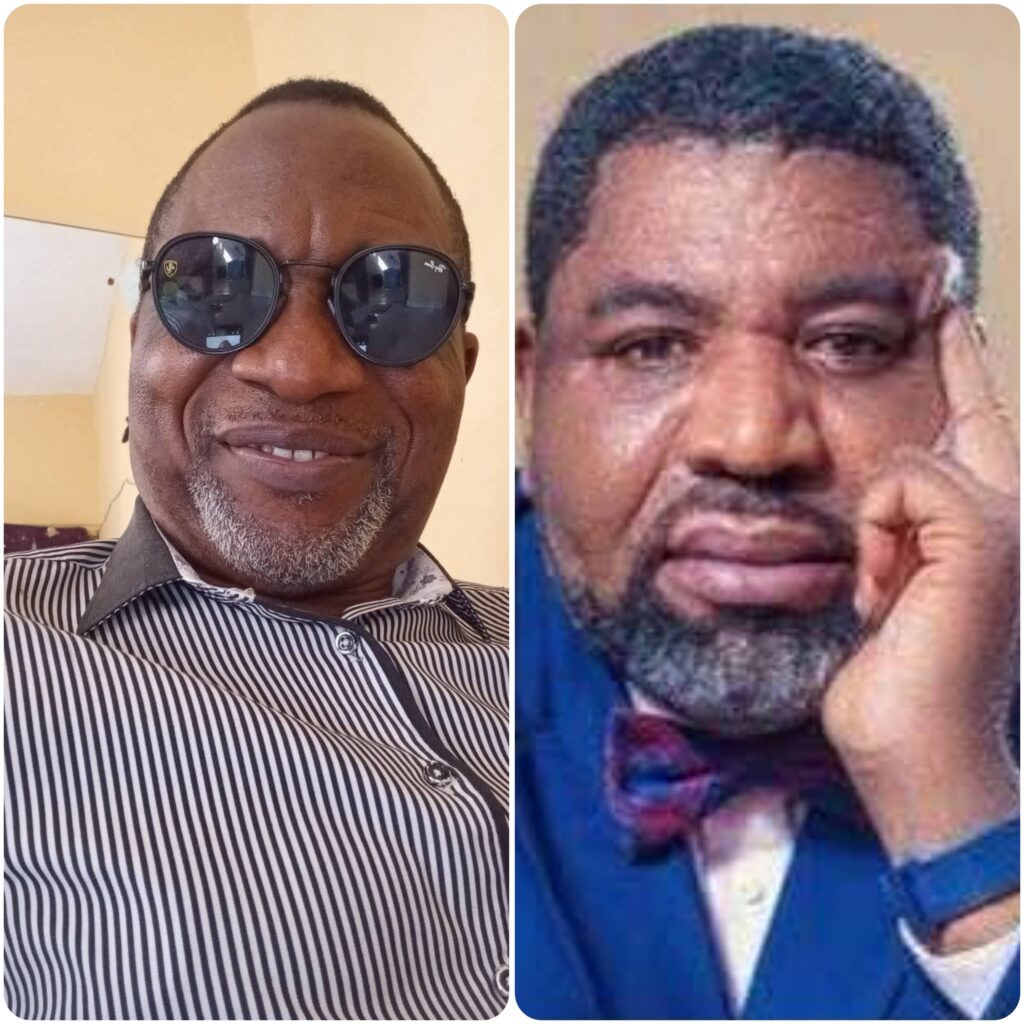
To those who know him, the description jars.
Kila is not a man who needs introduction on Nigeria’s public affairs circuit. As a Jean Monnet Professor of Strategy and Development, Director of the Commonwealth Institute of Advanced and Professional Studies, CIAPS, and Pro-Chancellor of Michael and Cecilia Ibru University, Delta State, he has spent over two decades as one of the most consistent, articulate and brutally independent analysts on television, radio and global policy platforms.
No one has ever faulted his brilliance. Even his fiercest ideological opponents concede his mastery of facts, his clarity, and his ability to distill complex governance issues into simple, actionable insights. That is what makes the current storm curious.
The controversy has centred on his role as Pro-Chancellor. What many commentators have failed to understand is what a Pro-Chancellor actually is.
In the Nigerian university system, the Pro-Chancellor is not the Vice-Chancellor. He does not run the university. He is not a full-time employee. He is not on the monthly payroll.
The Pro-Chancellor serves as Chairman of the Governing Council or Board of Governors – the highest oversight body of the university. He provides strategic direction, chairs council meetings and represents the institution at ceremonial functions. He is appointed by the Visitor or Proprietor for a fixed tenure.
Crucially, he does not earn a salary. What is due to him, by extant university regulations, are sitting allowances, transport and incidental allowances for attending council meetings and official functions. In private universities like MCIU, it is even more clearly an oversight, non-executive role.
In other words, Professor Kila is not a government appointee. He does not work for government. He does not draw from the treasury. So, why the hunt?
Those close to Kila say the answer may lie not in what he claims, but in what he says.
Unlike many public analysts who hedge, Kila does not. On economy, on governance, on foreign policy, on institutional reform, he speaks with data, with history, and with an unusual frankness that spares no political divide. He has at various times taken positions that have unsettled both government and opposition, both Left and Right.
He is not a politician, and that is precisely his power. He has no party to defend, no appointment to protect. His only constituency is his conscience and his craft.
In a season where public discourse is increasingly weaponized, independent voices become inconvenient. When you cannot fault a man’s analysis, you attempt to fault his identity.
Is there an undercurrent to this sudden focus? Is this about professorship at all, or about silencing a voice that has refused to be enlisted?
Why would a non-salaried, part-time council chairman of a small private university in Delta State attract the kind of investigative energy usually reserved for ministers, governors and heads of parastatals who control billions?
Kila himself says he is baffled. “I hold no political office, I am not seeking one and I am not a government official,” he said in his response.
He has not run away. He has not hedged. He has said plainly: “For the avoidance of doubt, I am a professor, and I stand by the title and the professional and academic credentials on which it is based.” He has promised that facts and documentation will speak for themselves, and has instructed his lawyers to review the publication.
For a man whose entire career has been built on ideas, on teaching, on building institutions like CIAPS that have trained thousands across the Commonwealth, the label “fake” is not just a factual claim – it is an attempt to erase.
Nigerians are discerning enough to ask: If a scholar of Kila’s standing, with verifiable international academic footprints, can be so casually redefined in a headline, who is safe?
And more importantly, who benefits when a brilliant, independent, non-aligned analyst is forced to spend his time defending his name instead of interrogating power?
The court may eventually decide the legal question. But the public is already asking the political one: Who is after Professor Kila?