
Human Rights
Ekiti 2026: Professor Omotola Predicts Peaceful Governorship Election, Raises Concerns Over Security Risks

By Kemi Folarin
A professor of political science at Federal University Oye-Ekiti, Shola Omotola, has projected that the forthcoming governorship election could rank among the most peaceful in the state since Nigeria’s return to democratic rule in 1999, while cautioning that insecurity, electoral violence, misinformation, and youth manipulation still pose threats to a credible electoral process.
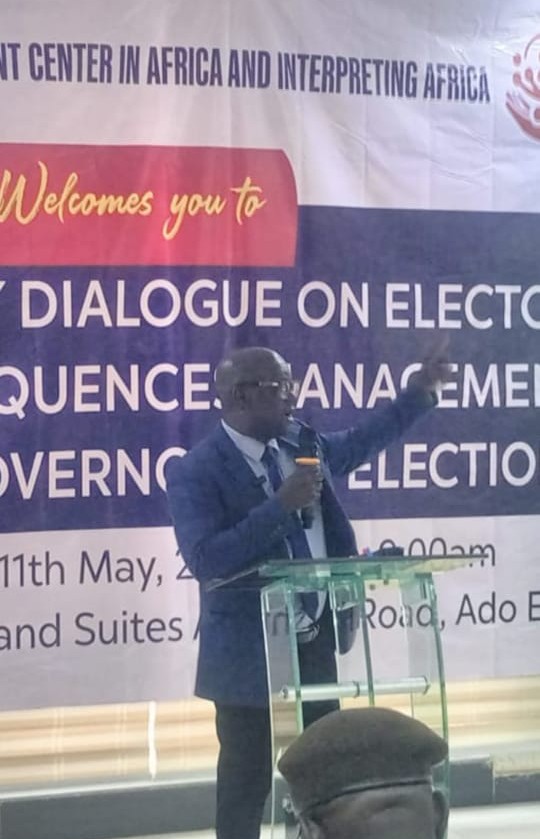
Omotola made this known during a one day stakeholders’ engagement on electoral integrity and peaceful elections held on Monday at the Delight Hotel and Suites located at Ilawe Ekiti road in Ado Ekiti, where he assessed the political climate ahead of the poll and highlighted factors that could either strengthen or undermine democratic stability.
He said findings from recent studies suggest positive signs for a peaceful election but stressed that authorities and political actors must remain vigilant.
According to him, while the state currently shows promising indicators of peace, several risk factors still demand urgent attention, especially the threat of electoral violence, insecurity around border communities, and political desperation.
He noted that kidnapping and security in the neighbouring states could spill across borders and create tension during the election period.
The professor also raised concerns over the misuse of social media, warning that fake news, misinformation, and disinformation could inflame political tension if left unchecked.
He urged political stakeholders and citizens to avoid spreading unverified information capable of disrupting peace or creating unnecessary panic among voters.

Speaking of youth participation, Omotola described young people as a critical force capable of shaping the outcome of elections either positively or negatively.
He explained that the large concentration of students and unemployed youths in the state makes them vulnerable to political manipulation, particularly during election seasons.
He advised relevant authorities to engage tertiary institutions and sensitise students, especially non-indigenes who may not be eligible to vote but could become tools for political violence if not properly monitored.
According to him, youth involvement in elections should focus on democratic participation rather than political thuggery.
Professor Omotola further identified unemployment and poverty as major drivers of electoral misconduct, warning that financially vulnerable citizens are often targeted for vote-buying and political inducement.
He stressed that politicians may exploit economic hardship to influence and destabilise the electoral process.
Offenses, oral offences, the political scientist explained that any action capable of interfering with the integrity, fairness, and credibility of elections constitutes total offence.
He listed vote-buying, voter intimidation, electoral violence, misinformation, and manipulation of results as practises that weaken democracy and undermine public trust in elections.
He noted that electoral offences could occur before, during, and after elections and involve multiple actors, including politicians, voters, electoral officials, security agencies, media practitioners, and observers.
Omotola stressed that protecting democracy requires collective responsibility from all stakeholders.
While expressing confidence in the possibility of a peaceful election, the professor urged residents, political parties, and government institutions to sustain voter education sensitization to prevent avoidable crises.
He maintained that only transparency, accountability, and peaceful participation would guarantee a free, fair, and credible electoral process.