
Uncategorized
Tinubu: Traditional Rulers Central To Governance, Grassroots Progress

By Rotimi Aleshinloye
President Bola Ahmed Tinubu says his administration is working to restore traditional rulers to a more active role in Nigeria’s governance, calling them “indispensable partners” for peace, security, and community development.
Speaking Saturday at the final farewell and reception for the late Oba Sikiru Kayode Adetona at Dipo Dina Stadium, Tinubu—represented by Ogun State Governor Dapo Abiodun—said the Renewed Hope Agenda moves monarchs beyond ceremonial duties into real governance work. That includes conflict resolution, economic mobilisation, and nation-building.
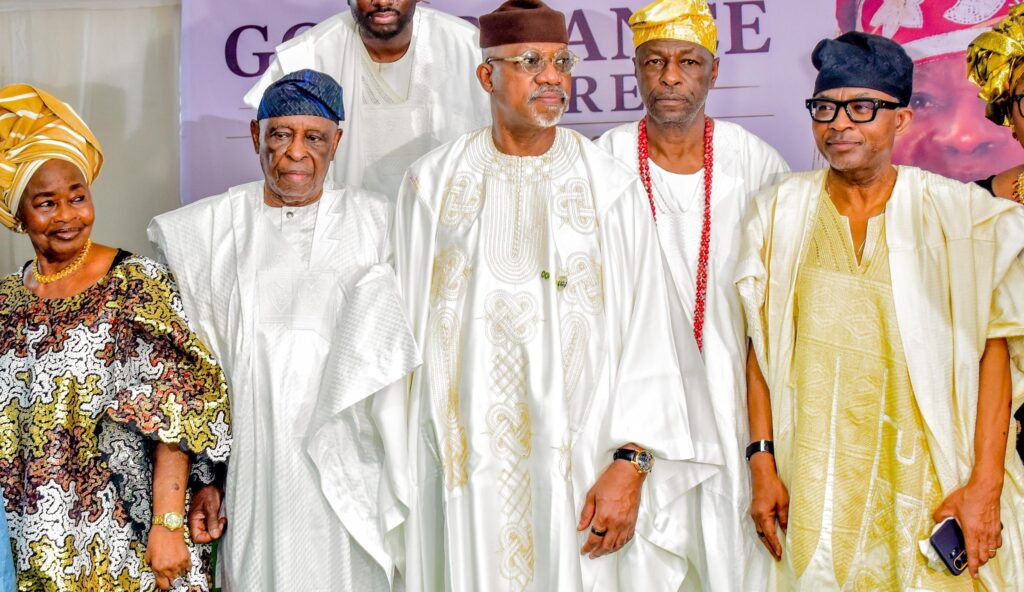
“Our vision is clear — a Nigeria where traditional institutions are recognised as critical stakeholders in promoting peace, preserving values, strengthening harmony, and advancing grassroots development,” Tinubu said.
The President noted that traditional rulers bring indigenous intelligence, moral authority, and social legitimacy that government institutions alone can’t replicate.
He pointed out that the 1963 Constitution gave traditional institutions real weight, but later constitutional changes eroded their influence and weakened the link between government and grassroots leadership.
Tinubu assured that his government supports ongoing National Assembly discussions to give traditional rulers clearer constitutional roles. “This is not about politics; it is about strengthening governance, deepening inclusion, and recognising an institution that has sustained social order for centuries,” he said.
He added that the Federal Government continues to consult with traditional and religious leaders through the National Council of Traditional Rulers of Nigeria on security, economic growth, communal peace, and social stability. Those engagements, he said, will build trust between government and citizens, while efforts are underway to better equip monarchs to shape national discourse and community leadership.
Tinubu urged royal fathers to lead peacebuilding efforts amid current security challenges.
He asked that palaces become centers of wisdom, reconciliation, and conflict resolution, and called for stronger community-based security through intelligence gathering, early warning systems, and vigilance.
He also tasked traditional rulers with steering youths away from violence, extremism, drug abuse, and other vices, stressing that Nigeria’s cultural heritage is a strategic asset, not a relic.
The President praised the Oba Sikiru Adetona School of Governance for hosting the lecture in honor of the late Awujale, whom he described as courageous, disciplined, and principled—a monarch who ruled with wisdom, candor, and integrity.
On the lecture theme, “Bridging the Gap Between Traditional Institutions and Modern Government,” Tinubu called it timely for Nigeria’s democratic growth. “The theme speaks to one of the most important governance questions of our time — how to harmonise the authority of our ancestral institutions with the structures of constitutional democracy in advancing national progress,” he said.
Former President Olusegun Obasanjo, represented by Architect Abiodun Fari-Arole, Special Adviser on Housing, described the late Awujale as a monarch whose influence reached beyond Ijebuland.
He called Oba Adetona a close ally and advocate of peace, justice, and fairness, remembered for reforming Ogun State’s Traditional and Obas Law to allow monarchs to choose their burial rites.
In another session titled “A Dialogue for a Stronger Future,” Sheikh Mustapha Bello emphasized that culture and traditional institutions are vital for socio-economic development. Culture defines a people’s identity and history, he said, and must shape governance and policy.
He argued that monarchs should be consulted on policy formulation and implementation because they are the true voice of the grassroots.
Though Nigeria runs a constitutional democracy, Sheikh Bello said the country would gain more by fully integrating traditional institutions into governance. “Let there be specific roles for the Obas. They are deeply rooted in the traditions and culture of our people. Many of them are highly experienced, and their contributions can greatly assist government in formulating policies and initiatives that directly benefit the people,” he said.